



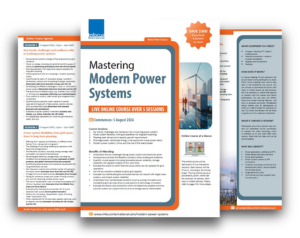
Mastering Modern Power Systems (Online Course)
WHEN
5, 6, 11, 12, 13 August 2026
WHERE
Live Online Course

Overview
Understand the technological and market-based solutions to combine grid resilience with systemic shifts, including low-carbon generation, distributed power and electrification.
This course is designed to provide a time-effective yet wide-ranging insight into the changing world in which power grid operators, power project developers, policymakers and power system solutions providers find themselves.
It will describe and discuss challenges and solutions in future low-carbon energy systems, where grid infrastructures and power system operations must develop in parallel with growing and irreversible trends such as ‘variable’ renewable power, electrification, energy storage and energy asset decentralisation. It will help attendees understand and evaluate the options available to ensure that a future low-carbon power system retains the reliability and resilience of a conventional one. It will describe how multiple options and a ‘systems-thinking’ approach is critical to the successful evolution towards the power system of the future.
As such, the course will provide invaluable content to a range of stakeholders in the power system. Information will be delivered with a clear business and commercial focus, accessible to non-technical job functions yet providing enough technical depth to provide attendees a level of understanding which is essential to working on the issues in future.
Benefits of Attending
- Understand the key challenges facing power systems and electricity grids
- Compare and contrast the flexibility solutions which enable grid resilience
- Quantify crucial aspects including renewable power variability, storage scalability, the capacity impacts of EVs, and more
- Evaluate the extent to which thermal power plants can be replaced for grid operations
- List the key solutions available to grow grid capacity
- Evaluate how distributed grid-connected devices will coexist with larger-scale systems, and impact system reliability
- Understand how market-based solutions (such as pricing innovation and competitive grid services) are a crucial adjunct to technology innovation
- Evaluate the factors and constraints which will determine whether and how a power system can support the move to an energy-secure ‘electrostate’
Live Online Course – How It Works
The structure of our virtual learning program is designed to keep the same levels of engagement and networking as our on-site public courses. Course content is delivered through our easy-to-use online learning platform and is supplemented by case studies and practical exercises.
Like our classroom-based public courses, you will have live interaction with our course facilitators and other participants. Our live online courses are led by our experienced instructors, who will provide you with easily digestible content, using knowledge learned from many years in the industry, during scheduled times. Delegates will receive copies of the course materials electronically.
This course is scheduled to take place over 5 live online sessions using virtual learning technology.
Course Agenda
Session 1: 5 August 2026, 12pm – 3pm GMT
Key trends, challenges and resilience risks in evolving power systems
- Reviewing the systemic changes influencing electricity grid resilience
- Power vs. energy, including why grids fail and the causes of blackouts
- Grid requirements, from second-by-second operation to long-term planning
- Matching demand with an increasingly ‘variable’ electricity supply
- Quantifying the reality of renewable energy ‘variability’: timeframes, statistics and forecasting/foresight capabilities
- Contrasting the different challenges in solar vs. wind-centric power systems
- The economics of reliable supply, e.g. levelized costs (LCOE) vs. firming costs
- From scarcity to surplus: clean power, grid congestion and curtailment
- Quantifying the potential system capacity increases required by the growth of data centres, electric vehicles (EVs) and electrified heat
- Examples of power systems in transition (country case studies, e.g. China, Australia, the UK, India)
- An independent perspective on which key grid trends to watch, and why
Session 2: 6 August 2026, 12pm – 3pm GMT
Power system flexibility, from grid operations to long-term planning
- Defining ‘firm’ capacity and flexibility on different timeframes, from sub-second to long-term
- The challenge of providing reliable grid operations with fewer thermal generators
- Grid flexibility solutions, including: energy storage, interconnection, low-carbon thermal power
- Reviewing grid electricity storage today, including key limitations and emerging technologies
- Quantifying responsiveness and resilience requirements for key grid/ancillary services
- Fast frequency controls and synthetic inertia, through grid-forming inverters
- Voltage control and reactive power
- Paying for resilience: project and system firming solutions and costs for balancing variable power supply
- The rise of ‘dispatchable’ solar, including the emergence of 24-hour, baseload solar
- Example policy frameworks and tenders for firm and baseload clean power
- Options for low-carbon ‘dispatchable’ supply
- Policy mechanisms for forward peak capacity planning, such as capacity markets
- Long-duration energy storage: options, economics and limits to scale
Session 3: 11 August 2026, 12pm – 3pm GMT
Meeting peak demand and capacity growth requirements
- The impacts of electrification and demand growth on peak demands and system capacity needs
- Local distribution network capacity constraints and limitations (and solutions)
- How far can electrification penetrate, and under which key constraints?
- How much new grid is required?
- Congestion and curtailment in the grid, including scale and system cost impacts
- Reviewing the options for expanding grid network capacity
- Solutions for increasing capacity from existing grid lines
- ‘Virtual’ power lines, dynamic line rating (DLR) and more
- Practical, natural and geographical constraints on grid expansion, including sociopolitical barriers and grid planning alternatives
- Paying for the grid, including: required growth, capital and consumer costs, offshore vs. onshore grids
- Interconnectors: connectivity advantages vs. energy security considerations
Session 4: 12 August 2026, 12pm – 3pm GMT
Grid-edge assets: distributed energy, smart grids and virtual power plants
- Evolution and revolution at the grid edge (‘smart’ demand & the ‘Internet of Energy’)
- Power supply and storage behind-the-meter
- Aggregation and the growth of virtual power plants (VPPs), including: their role in grid balancing, capacity support and grid resilience
- Aggregation, algorithms and AI: new realms in asset management
- Demand-side response (DSR) programmes, from industrial into residential markets
- Price elasticity and the significance of time-of-use (ToU) and dynamic tariffs in power system flexibility
- Sources and implementation of dispatchable demand
- What does a ‘smart’ power system require, in terms of technology and customer acceptance?
- Decentralised and centralised approaches to grid flexibility: competition and/or co-operation?
- Microgrids: trends in technology integrations, scales, deployments and enabling technologies
- Grid-connected microgrids for system resilience, including: event recovery, capacity balancing, EV charging integration
- Local energy trading: peer-to-peer (P2P) electricity and decentralised energy markets
Session 5: 13 August 2026, 12pm – 3pm GMT
Modern power systems, China, and the rise of the ‘electrostate’
- Evolving power systems in the face of changing energy transition forecasts
- China’s energy transition: the rise of the world’s first ‘electrostate’?
- Which resources are required to build an electrostate?
- Primary renewable energy constraints, including: energy density, land use and location (illustrated with data and quantitative calculations)
- The current global picture, prospects and timeframes for ‘in-shoring’ key electrostate technology building blocks and components
- What are the limits to scale, and how might ‘partial’ electrostates develop?
- What are the cost barriers (to consumers) of transitioning to an electrostate?
- Electrification and energy security in the context of free trade retreats, protectionism, and bilateral trade
- The convergence of IT with energy, and what it means for pace of change
- The integration of electricity grids with the wider energy system, including clean fuels
- Evaluating the role of ‘power-to-fuels’ (PtX) and power/gas system integration
- Summary: pathways to growing clean-but-resilient power systems
Training Methodology
The agenda will combine presented materials with plenty of opportunity for Q&A, interactive discussions, and the use of simple quantitative models and calculations to illustrate key learning points.
Current market examples, trends, news and data are utilised wherever helpful to illustrate the learning. It is important to note that market intelligence and examples are continuously updated and refreshed before every course, and so not always reflected in detail in the prepublished agenda.

Pre-Course Questionnaire
We would like to customise the workshop based on your specific needs. Pre-Course Questionnaire will be sent prior to the workshop for analyse in advance and to be addressed during the course.

Course Certificate
Upon the successful completion of this course, you will receive a Certificate of Completion bearing the signatures from both the Course Director and the Course Organiser. This Certificate will testify your endeavour and serve towards your professional advancement.
Who Will Attend
The course is aimed at commercially-focused people who need a solid, independent and integrated understanding of the opportunities and risks created for firms by the evolution of electricity systems to include more diverse resources, low-carbon generation, and the electrification of applications such as transport.
Attendees will be drawn from roles such as business and product development, strategy and market analysis, from firms from sectors including power generation, energy storage, grid operations and product solutions, policy and investment.


You Might Also Be Interested In
Mastering Solar Power (Online Course)
Building solar power into clean, modern & flexible power systems
Dates: 29 June – 3 July 2026
Electricity Economics (Online Course)
The new economics of power markets in a low-carbon world
Dates: 16 – 19 November 2026
Energy Storage (Online Course)
A business-focused assessment of energy storage opportunities, competing solutions and project delivery essentials
Dates: 3, 4, 9, 10 December 2026
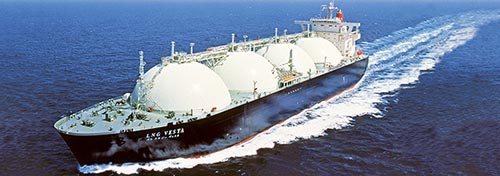
Gas & LNG Markets, Contracts and Pricing (Online Course)
A comprehensive all-in-one course addressing all key elements for successful gas & LNG business strategies
Dates: 1, 2, 8, 9, 10, 14, 15, 17 September 2026

Carbon Capture, Utilisation and Storage (CCUS) (In-Person Course)
Master the technology pathways, its business drivers, economics and deployment strategies
Dates: 12 – 14 October 2026
Venue: Singapore

Mastering Clean Ammonia (Online Course)
A business guide to ammonia production, market opportunities & deployment challenges