



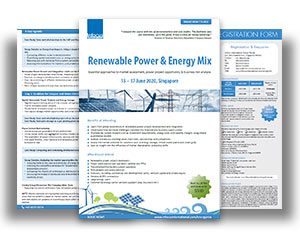
Renewable Power & Energy Mix (in house)

Overview
Essential approaches to market assessment, power project opportunity & business risk analysis
In increasing parts of the world, renewable power sources – particularly solar and wind – are now the cheapest way to generate electricity. This, combined with being crucial mechanisms by which to lower the carbon emissions of energy systems, means they are also the fastest-growing supply of new power generating capacity. It is vital that anyone involved in electricity systems, from new power project developers to incumbent utilities, investors and policymakers, has a thorough understanding of how renewables are impacting the energy mix and the wider power business.
In particular, the transition away from conventional thermal generators towards renewable ones has profound implications for how power systems are designed, operated and policed – on a variety of timescales from sub-second management to long-term capacity planning. These in turn create both new market opportunities and significant businesses risks within the sector, not just for those involved in system-wide aspects such as the grid or policy, but for those involved in individual project development too.
In three intensive and informative days, this course explains and illustrates the key impacts of renewable power integration into modern energy systems, based on global lessons and examples. Most importantly it provides attendees with a market assessment framework and recommended approach to identifying and quantifying how these integration challenges change the specific new opportunities and risks facing their own businesses.
Benefits of Attending
- Learn from global experiences in renewable power project development and integration
- Understand how technical challenges translate into financial and business opportunities
- Illustrate key system impacts such as investment requirements, energy costs and capacity margins using simple quantitative models
- Analyse and discuss evolving value chain roles, partnerships and competitors
- Assess the market potential for solutions such as energy storage, virtual power plants and smart grids
- Gain an insight into the influences of market liberalisation and policy shifts
Course Agenda
DAY 1: Essential System Requirements When Integrating Renewable Power into Energy Mix
- Defining and Delivering a Reliable Power System
- Case Study: The UK electricity system operator (ESO) approach to power system flexibility
- The Attributes of Renewable Power
- Case Study: Resource risk of a wind power project from a financial perspective
- Grid & Ancillary Services
- Case Study: Grid services from solar power in the US
- Group Exercise: How to identify new opportunities (& new risks) for renewable power projects
DAY 2: Disruptive Impacts of Renewable Power Project Integration on the Value of Energy
- The Market and Economic Integration of Renewable Power
- Case Study: Negative power pricing in Germany and California, peak pricing in Australia
- Case Study: Corporate purchasing in solar (PPA)
- Quantifying Levelised Costs, Financing Costs and Energy Costs
- Group Exercise on Energy Cost Impacts: Using a simple Excel model to illustrate the economics of a changed energy mix
- Renewable Power Growth and Integration: Limits on the Pace of Change
DAY 3: Enablers for Deeper and More Distributed Renewable Power Project Integration
- Hybrid Renewable Power Projects and Energy Storage
- Case Study: Solar and wind hybrid projects from Australia and the UK
- Case Study: Solar-plus-storage as a gas peaking plant replacement in the US
- Power System Restructuring
- Case Study: Comparing and contrasting distributed solar power growth from Africa and Asia
- Group Exercise: Analysing the market opportunities for ‘flexible’ renewable power deployments at different scales
- Closing Group Discussion: The Changing Value Chain
Training Methodology
The agenda will combine presented materials with plenty of opportunity for Q&A, interactive discussions, and the use of simple quantitative models and calculations to illustrate key learning points.
Current market examples, trends, news and data are utilised wherever helpful to illustrate the learning. It is important to note that market intelligence and examples are continuously updated and refreshed before every course, and so not always reflected in detail in the prepublished agenda.

Pre-Course Questionnaire
We would like to customise the workshop based on your specific needs. Pre-Course Questionnaire will be sent prior to the workshop for analyse in advance and to be addressed during the course.

Course Certificate
Upon the successful completion of this course, you will receive a Certificate of Completion bearing the signatures from both the Course Director and the Course Organiser. This Certificate will testify your endeavour and serve towards your professional advancement.


Who Will Attend
- Renewable power project developers
- Power plant owners and operators (utilities and IPPs)
- Transmission/Distribution system operators
- Policymakers and policy advisors
- Investors, including commercial and development banks, venture capital and private equity
- Vendors & EPC contractors
- Large energy users
- Commercial energy-sector services suppliers (law, insurance etc.)






















You Might Also Be Interested In
Power Week Virtual Conferences
International conference & summit specially designed for the electric power & energy industry
16 – 19 November 2020, Africa
15 – 18 March 2020, Asia
Mastering Wind Power
An essential guide to the business of wind power project planning & development
Date To Be Announced
Mastering Solar Power
A comprehensive, up-to-date and business-focused roadmap to success in delivering solar power growth, today and tomorrow
Date To Be Announced

Renewable Power Purchase Agreement
Structuring successful PPAs, managing competitive electricity markets & attracting merchant power investments
Date To Be Announced

Electricity Economics in Changing Electricity Markets
The new economics of power markets in a low-carbon world
Date To Be Announced

EPC Contracts for Energy Industry
Mastering the legal and commercial framework, contract negotiation, financing, risk and contractor relationship complexities of upstream and downstream EPC projects